Saturday, September 28, 2024

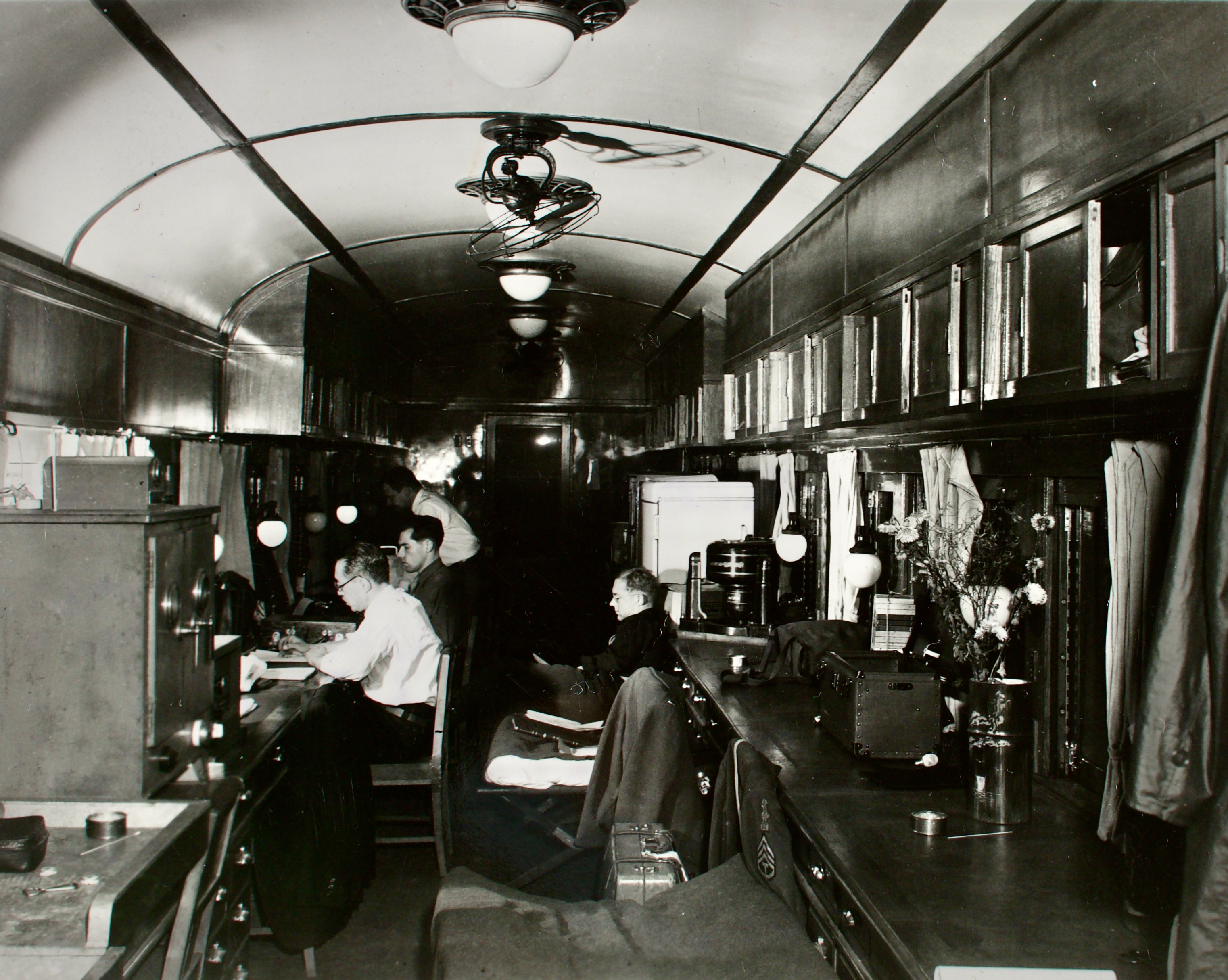
This was a railroad car tray in a special laboratory at the 406th Medical Laboratory's Special Laboratory Railroad Car Tray in USA at night by members of the Atomic Bomb Casualty Commission (Dr. A. Baues, J. Neel, 1st Lt. MC) and Dr. Masao Tsuzuki (University of Tokyo).

    Undisclosed photos of Japanese

        A-bomb survivors

   U.S. Atomic Bomb Surveys

The National Archives College Park, Maryland

                    SC-273230


SC-273230

487  SC-47-70153

6. DECEMBER 1946

THE 406TH MEDICAL LABORATORY'S SPECIAL LABORATORY RAILROAD CAR TRAY, SHOWN IN USE AT NIGHT BY MEMBERS OF THE ATOMIC BOMB, CASUALTY COMMISSION (DR. A. BAUES, J. NEEL, 1ST LT. MC) AND DR. M. TSUZUKI, DECEMBER. 1946.

PHOTOGRAPHER DR. HENSHAW

Laboratories

RELEASED FOR PUBLICATION

BUREAU OF PUBLIC RELATIONS WAR DEPARTMENT, WASHINGTON

Photograph by Signal Corps. U.S. Army 

14468


SC-273230  

487 SC-47-70153

1946年12月6日

原爆傷害調査委員会のメンバー(A.バウズ博士、J.ニール、MC1等陸尉)と都築正男博士(東京大学)が、夜間に使用した第406衛生研究所の特別実験室の鉄道車両トレイである。

1946年12月。

写真家: ヘンショー博士

研究所

出版物: ワシントンの陸軍省広報局

アメリカ陸軍通信兵団撮影 アメリカ陸軍 

14468

Saturday, September 21, 2024

A Japanese painter sketched the ruins of the Hiroshima atomic bomb in September 1945. The American military atomic bomb survey team photographed the Japanese painter.

                    Undisclosed photos of Japanese

        A-bomb survivors

   U.S. Atomic Bomb Surveys

The National Archives College Park, Maryland

                   SC-473752


TR-15644

473752 September 1945

SUBJECT:

CAPTION:

JAPANESE ARTIST SKET SCETCHES RESULTS OF HIROSHIMA ATOMIC BOMB BLAST.

LOCATION: HIROSHIMA, JAPAN

PHOTOGRAPHER: MILLER, WAYNE, LI. TAKEN BY (UNIT)

LOCAL NO: TR-15644

CLASSIFICATION: RELEASED


Postscript: Keizo Takamasu, aged 45, took up his paintbrush in the ruins left by the atomic bomb. He was a teacher at the Hiroshima Prefectural School for the Deaf in the center of Hiroshima, and was searching for his remaining relatives when he was photographed by Miller Wayne of the US Army. His eldest son, who was with him, wrote in his diary at the time that it was September 9th, 1945. Keizo Takamasu made a sketch of Hachobori, and 17 other pictures were left behind. These were the “Sketch of the Hiroshima Atomic Bomb” that he drew in the early stages of the war. In order to avoid air raids, he moved to Yoshida-machi, about 45km north of the city, with his eldest son and eldest daughter in April 1945. From Yoshida-machi, they could see the mushroom cloud of the atomic bomb over Hiroshima, and his father, Keizo Takamasu, sketched it. He had also drawn a picture scroll of the Great Tokyo Fire of September 1, 1923, which killed around 140,000 people. On August 14, 1945, Keizo Takamasu and his two children entered Hiroshima City to check on the situation at their home and school, and were exposed to radiation. However, they were unable to obtain an A-bomb Survivor's Health Handbook.
Saturday, September 14, 2024

Japanese soldiers and civilians flocked to the train in September 1945 to take advantage of free transportation from Hiroshima to their hometowns after the end of World War II.

Undisclosed photos of Japanese

        A-bomb survivors

   U.S. Atomic Bomb Surveys

The National Archives College Park, Maryland

                       SC-473761


TR -15653

473761 Sept.1945

SUBJECT:

CAPTION:

DISCHARGED JAPANESE SOLDIERS CROWD TRAINS AS THEY TAKE ADVANTAGE OF FREE TRANSPORTATION TO THEIR HOMES AFTER END OF WORLD WAR II IN HIROSHIMA, JAPAN.

LOCATION:

HIROSHIMA, JAPAN

PHOTOGRAPHER:

MILLER, WAYNE, LI. 

TAKEN BY UNIT)

LOCAL NO: TR 15653

CLASSIFICATION:RELEASED


Saturday, September 7, 2024

NAGASAKT ATOMIC BOMB SURVIVOR NOW RETAINS HEAVY SCARS FROM BURNS: TAMA YAMADA SUSTAINED BURNS WHEN ABOUT 1 KM. FROM THE GROUND CENTER AT NAGASAKI.

 Undisclosed photos of Japanese

        A-bomb survivors

   U.S. Atomic Bomb Surveys

The National Archives College Park, Maryland

            SC-273296


SC-273296

EEC-47-70145

Se. 273 296 10 DECEMBER 1946

NAGASAKT ATOMIC BOMB SURVIVOR NOW RETAINS HEAVY SCARS FROM BURNS:

TAMA YAMADA SUSTAINED BURNS WHEN ABOUT 1 KM. FROM THE GROUND CENTER AT NAGASAKI. THE BURNS HEALED FOLLOWED BY EXTENSIVE FORMATION OF HEAVY ELEVATED SCAR TISSUE. SHE ALSO LOST ALL OF SCALP AND AXILLARY HAIR, SCALP HAIR NOW HAVING RETURNED BUT NOT AXILLARY HAIR. ONE OF THREE OTHER PERSONS WITH HER DIED.

PHOTOGRAPHER: DR. MENSHAW

RELEASED FOR PUBLICATION BUREAU PUBLIC RELATIONS WAR DEPARTMENT, WASHINGTON

Atomic Bome Casualities

 Phtography by Sigmal Corps US.Army 14668


SC-273296

EEC-47-70145

Se. 273 296 1946年12月10日

長崎原子爆弾の被爆者は、現在も火傷の痕が深く残っている:山田タマさんは、長崎原子爆弾の爆心地から約1キロの地点で火傷を負った。火傷は治ったが、その後に、重く盛り上がった瘢痕組織が広範囲に形成された。頭皮と腋毛もすべて失ったが、頭皮の毛は戻ったが、腋毛は戻らなかった。一緒にいた3人のうち1人が死亡した。

撮影者:Dr. メンショー

ワシントンの陸軍省広報局

原子爆弾の犠牲者

撮影:シグマル軍団アメリカ陸軍 14668

The boy was admitted to a hospital in Nagasaki after the atomic bombing. Even five months after the explosion on August 9, 1945, he was still suffering from severe burns and keloids (Bring Back the Human Being, 1982).

    The boy was admitted to a hospital in Nagasaki after the atomic bombing. Even five months after the explosion on August 9, 1945, he suff...