Saturday, December 16, 2023

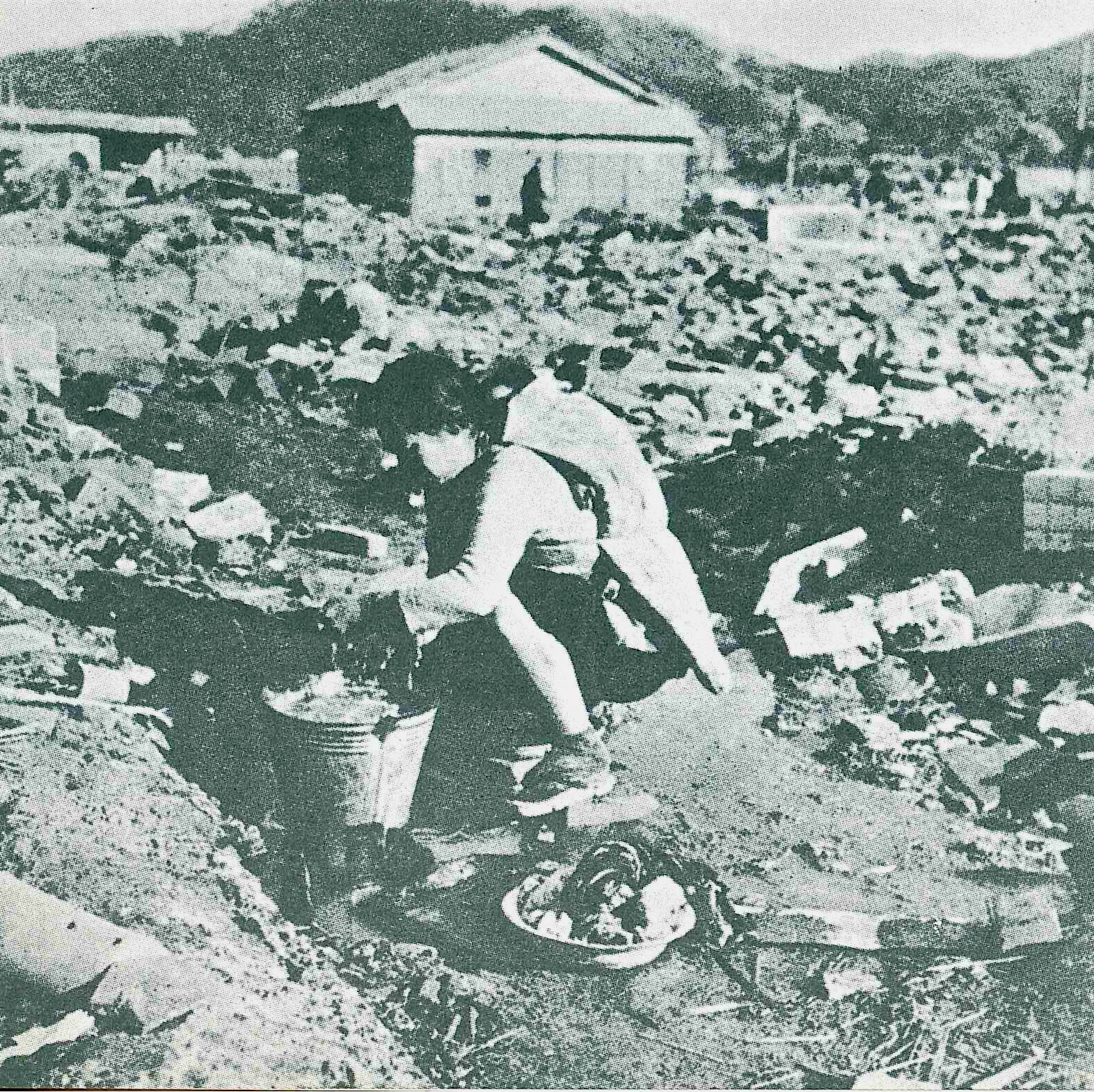
After the Hiroshima atomic bomb exploded, a woman returned home and went out to do laundry in the burnt and destroyed city of Hiroshima. While carrying a child on her back, the woman crouched in a bucket and washed the clothes by hand.

  After the Hiroshima atomic bomb exploded, a woman returned home and went out to do laundry in the burnt and destroyed city of Hiroshima. While carrying a child on her back, the woman squatted in a bucket and washed the clothes by hand. Taking a bath, washing hair and body, and washing clothes were routine decontamination. By rinsing with water, it was possible to remove a significant amount of radioactive material

 At 8:15 a.m. on August 15, 1945, an atomic bomb was dropped on the city of Hiroshima from an altitude of approximately 9,630 meters and exploded just before it hit the ground. Suddenly, a whitish, pinkish glare appeared in the sky, accompanied by unnatural tremors. Within seconds, thousands of people in the streets and yards of downtown Hiroshima were scorched by a wave of searing heat. Many died instantly, while others lay on the ground in agony from the excruciating pain of their burns. Walls, houses, factories, and other buildings that stood upright in the blast were all destroyed. Debris swirled and soared into the air. Trams were picked up and tossed about as if they had no weight or solidity. Everything living was dying in indescribable agony. Beams, bricks, and girders swirled and collapsed houses. Houses within three miles of the hypocenter, the center of the atomic explosion, were flattened as if they had been built with cardboard. The few who managed to escape to safety died from gamma radiation poisoning about 20 to 30 days after the bombing.

 About 30 minutes after the atomic bomb exploded, while the sky over the Hiroshima area was cloudless, a fine rain began to fall on the city and continued to fall for about five minutes. This rain was caused by heated air suddenly rising to a high altitude, where it condensed and fell as rain. When it rained, radioactive materials drifting in the air above fell with the rain, which caused the detected radioactivity level to rise. Later, fierce winds blew and the fire spread with frightening speed. In the evening the fire began to die down and then went out. There was nothing left to burn. Hiroshima had been extinguished. The atomic bombs of Hiroshima and Nagasaki caused a fission reaction in the air, and with nothing to block it, a large amount of radioactive material fell to the ground.

 

Saturday, December 9, 2023

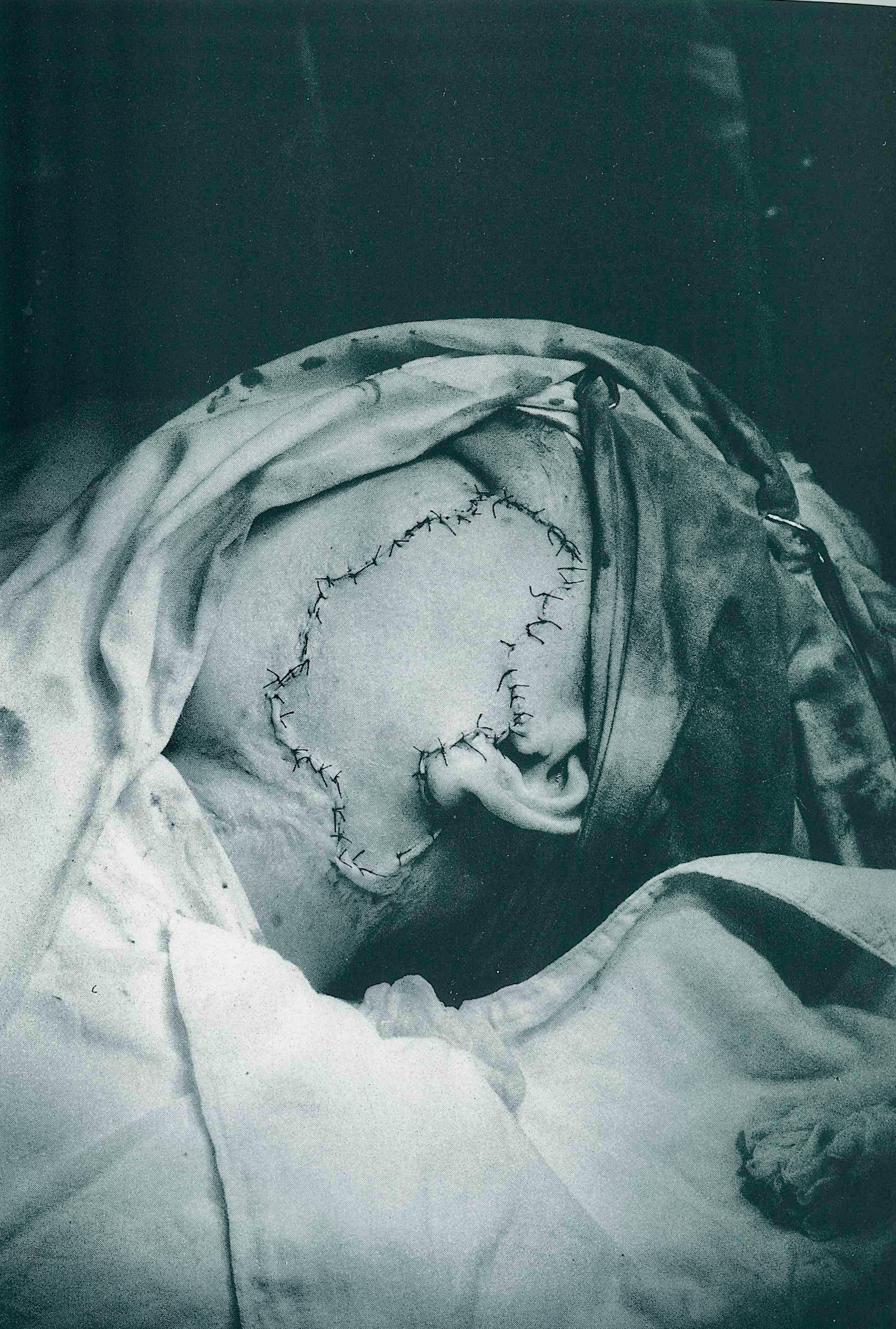
A 4-year-old girl was exposed to the Hiroshima atomic bomb in Fukushima-minami, Hiroshima, approximately 2 km from the hypocenter. The girl, who was 16 years old when she was exposed to the bomb, underwent skin grafting at the Hiroshima Atomic Bomb Surgery Hospital on October 21, 1957, to form the aftereffects of a scar with residual keloids.

 A 4-year-old girl was exposed to the Hiroshima atomic bomb in Fukushima South, Hiroshima, approximately 2 km from the hypocenter. She was left with burns and keloid sequelae on her left face and both hands. The girl, who turned 16 years old after the bombing, was admitted to Hiroshima Atomic Bomb Hospital on May 12, 1957, to form the aftereffects of the remaining scars.

 The 16-year-old girl, nicknamed Ms. Kintoki, was exposed to the Hiroshima atomic bomb when she was 4 years old and suffered severe burns on her face, neck, and elbows. Keloids subsequently appeared from the burned skin, and by the time she was 16 years old, she had undergone nine surgeries at Hiroshima Atomic Bomb Hospital to remove the keloids, rip off the unscarred skin, and have skin grafts. on October 21, 1957, skin graft surgery was performed to remove a scarred keloid on the left side of her face on one side of her cheek. The wound was stretched over the skin that had been removed and grafted from both thighs and stitched together with black thread.


 On the night of the surgery, Kintoki-san was always in pain and gasping. It was customary for his fellow inpatients to gather together and tie him to the bed with a belt strap while he was still under anesthesia. After the surgery, he was required to rest absolutely still. On the day of surgery, before Kintoki-san went to the operating room, he asked his fellow inpatients in the same room in a pitiful voice, "I can't be aborted tonight, so don't tie me up. However, that night, as usual, Kintoki-san fumbled in pain on the bed. Partially unable to rest, he was left with a bleeding spot on his left cheek.

 In July 1957, photographer Ken Domon made his first visit to Hiroshima 12 years after the atomic bombing, and he remained in the city for a total of 36 days until November 1957. He photo-documented the tragic "devil's claw marks" of the A-bomb survivors, including patients at the Atomic Bomb Hospital, on approximately 7,800 frames of film. His photo book "Hiroshima" (Kenkosha) was published in 1958 and received an international response.


Sunday, December 3, 2023

Urakami Station, about 1 km from the hypocenter of the Nagasaki atomic bomb, collapsed, and in mid-October, potato rationing began in the hastily constructed barracks at the Urakami Station depot. Nagasaki citizens who had been living in shelters gathered and formed a line to wait.

   The Nagasaki atomic bomb was dropped and exploded on August 9, 1945, and Urakami Station, located about 1 km from the hypocenter, collapsed. In mid-October, potato rationing began at the Urakami Station barracks. Nagasaki citizens who had been living in shelters since the bombing gathered and formed a line to wait. At the time, there was not enough food and clothing to go around, and everything was rationed.

 Urakami Station on the Nagasaki Main Line was located in the center of Iwakawa-cho, Nagasaki City. It was about 1 km south of the hypocenter. It was bordered by the Nagasaki Steel Works of Mitsubishi Steel Corporation on the other side of the tracks of the Nagasaki Main Line of Japan National Railways. Urakami Station was also lost, and buildings and people were suddenly destroyed by fire. Scattered about were the wreckage, layers of rubble, and smoldering fragments of buildings. At Urakami Station, the station building was completely destroyed, and of the approximately 70 JNR employees who worked there, about 20 were killed instantly. About 45 people died of atomic bomb-related illnesses after being exposed to the Nagasaki atomic bomb.

 The Nagasaki Steel Works of Mitsubishi Steel Corporation, from left to right in the photo, collapsed as well as Plant 4, Plant 1 Machine Shop, Plant 1 Forge Shop, Main Building, Substation, and Plant 2 Forge Shop, all at Nagasaki Steel Works. Due to the blast of the Nagasaki atomic bomb, the steel frames of the walls bent at the point of contact with the base support columns and tilted significantly. The walls and tin roofs were blown away, exposing the steel frame. The Mitsubishi Steel Works, located behind Urakami Station, was engulfed in flames, its steel frame crumbling noisily, bent and folded by the blast. The total number of employees was estimated to be about 5,300, with about 3,300 on duty on the day of the August 9 bombing, and about 1,700 on duty at 11:02 a.m., according to the half-shift system. About 1,700 others were joined by mobilized schoolchildren, women's volunteer corps, and naval operatives. Among them, about 1,400 were estimated to have died as a result of exposure to the Nagasaki atomic bomb.


Saturday, November 25, 2023

He is a 38-year-old male atomic bomb survivor. He is recovering from radiation sickness of A-bomb disease about 3 months after the atomic bomb was dropped. He showed necrosis of the oral gums and mandible.

  He is a 38-year-old male atomic bomb survivor. He is recovering from A-bomb radiation sickness. He was photographed approximately 3 months after the atomic bomb was dropped. He showed necrosis of the gums and mandible in the oral cavity.

 Ulceration of the mucous membranes, including gingivitis, stomatitis, and pharyngitis, was common in more severe cases of A-bomb disease. Clinical manifestations were similar to those of leukopenia. It was customarily accompanied by hemorrhagic diarrhea, which was difficult to assess because in many cases it was due to contagious inflammation. Petechiae may appear on the mucous membranes at the onset of gingivitis. However, skin hemorrhage appeared much later. Based on the data collected in Hiroshima, most cases occurred within a radius of about 1.5 km from the hypocenter.

 The U.S. Strategic Bombing Survey Group was formed on November 3, 1944, under orders from President Roosevelt. President Truman ordered an investigation into the effectiveness of air raids against Japan on August 15, 1945. The U.S. Strategic Bombing Survey Group for the war against Japan consisted of about 300 civilians, 350 officers, and 500 enlisted men. Starting in early September 1945, about a month after the atomic bombs were dropped, branches were established in Nagoya, Osaka, Hiroshima, and Nagasaki, with Tokyo as the base. The materials collected by the survey team were transferred to a permanent government agency, which conducted on-site surveys in the A-bombed cities of Hiroshima and Nagasaki for approximately 10 weeks from October to December 1945. The survey team collaborated with other survey organizations such as the Joint Conference on Atomic Bomb Surveys of Japan, the Anglo-Japanese Survey Mission to Japan, and the Japanese Naval Technical Survey Mission to Japan.

 There was no record of the cause of death of those who died immediately after the atomic bombs exploded. Radiation does not cause death immediately, and deaths from exposure to the atomic bombs are caused by other factors of injury. The Hiroshima Prefectural Health Bureau estimated that about 60% were burns (flash or fire burns), about 30% were falling debris, and about 10% were other injuries. Other estimates were that about 50% were due to burns and about 50% were other physical injuries.

 For survivors very close to the hypocenter who suffered neither flash burns nor secondary injuries, A-bomb sickness developed within two to three days, causing hemorrhagic diarrhea and acute inflammation of the upper respiratory tract and gastrointestinal mucosa. Some died within two to three days of developing A-bomb sickness. Most of the survivors died about a week later. The Japanese investigators had difficulty in proving significant changes in the blood in survivors who died within a short period of time.


Saturday, November 18, 2023

A Hiroshima atomic bomb was dropped and exploded on August 6, 1945, and a boy was exposed to severe burns on his face and arms. Immediately thereafter, he was transported to the Hijiyama National School relief station and admitted there.

 A Hiroshima atomic bomb was dropped and exploded on August 6, 1945, and a boy was exposed to severe burns on his face and arms. Immediately thereafter, he was transported to and admitted into the relief station of Hijiyama National School. Hijiyama National School was located approximately 2.8 km southeast of the hypocenter and escaped the fire. Immediately after the atomic bombing, injured Hiroshima citizens were evacuated, and the school became one of the 13 relief centers declared by Hiroshima Prefecture on August 7.

 From August 8, Hijiyama National School became an evacuation center for lost children, especially small children, children who were not in diapers, children who had suffered severe burns, and children who had been seriously injured. The victimized children were rescued by four or five teachers and members of the local women's club.

 At night, the children woke up crying, saying, 'Mom, I want to go to the latrine. Inside the dark relief station, another child woke up and started crying. The child had diarrhea from the atomic bombing and could not wait long for the latrine, soiling herself on the way. The child soiled his bed without waking up. The next morning, blankets and mosquito nets soiled with bloody excrement were hastily washed by hand, dried in the sun, and used again in the evening. The small children who absorbed large amounts of radiation lost their hair due to alopecia, continued to suffer from diarrhea, grew thinner by the day, and finally died of atomic bomb sickness. They were cremated one after another in a corner of the schoolyard, and unleashed military dogs ransacked the corpses, waiting for the next incineration.

  On August 8, two days after the atomic bombing, Hijiyama National School became the "Hijiyama Lost Children Camp" for orphans (called "lost children" at the time). At one time, about 200 children were housed there, but many of them died there of atomic bomb-related illnesses. The atomic bombing brought unprecedented chaos, and relief began for children whose guardians were not known to be alive or dead; by September 2, a total of 91 children (including 36 girls) were accepted, of which 40 were 0-5 years old, 47 were 6-12 years old, and 4 were 13 years old or older. Of these, 18 were taken in by their parents, 14 by relatives, etc. A total of 32 were taken in, but 9 died in the atomic bombings due to acute radiation injury from the bombs.


Saturday, November 11, 2023

About seven years after the Hiroshima atomic bomb exploded on August 6, 1945, a mother died of leukemia stemming from atomic bomb disease at a mother-child treatment center in Motomachi, Hiroshima. The boys, orphaned children whose mothers died of A-bomb disease, mourned by offering incense at the memorial service.

  About seven years after the Hiroshima atomic bomb was dropped and exploded on August 6, 1945, a mother died of leukemia resulting from the atomic bombing at a mother-child treatment center in Motomachi, Hiroshima. The mother died of A-bomb disease, and the remaining orphaned children, boys and girls, laid incense at the memorial service. The boys were about two years old when their mother was exposed to the bomb, and they had no knowledge or memory of the Hiroshima atomic bomb. The damage caused by the atomic bomb was still continuing after the war.

 The Maternal and Child Dormitories are child welfare facilities that provide comprehensive support for women in single-mother households and other families raising children under the age of 18, including living, housing, childcare, and employment, so that they can live safely with their children and become self-reliant. The requirements for admission are women without a spouse or women in similar circumstances, mothers and children who have various problems in their lives and need support in raising their children. Under the Child Welfare Law, the Child Welfare Center is an institution for the purpose of admitting women without a spouse or women in equivalent circumstances and children under their care, protecting them, supporting their daily lives to promote their independence, and providing counseling and other assistance to those who have left the institution. 1998 In 1998, the name was changed from "Maternal and Child Dormitories" to "Maternal and Child Living Support Facilities" in accordance with the revision of Article 38 of the Child Welfare Law.

 In 1938, the Ministry of Health and Welfare was established and the Maternal and Child Protection Law was enacted. In 1949, the Diet passed a resolution to increase the number of nursing homes, mother-child dormitories, and day-care centers, and in 1947, there were 212 mother-child dormitories, and by 2023, there will be 215 mother-child living support facilities with a capacity of 4,000 children. In 2023, there were 215 mother and child living support facilities with a capacity of 4,441 families, and the current number of families was 3,135, showing a downward trend. At the end of the war, the overwhelming majority of families were bereaved mothers and children who had lost their homes due to the war or the death of their husbands in the war. The mother-child dormitories provided postwar measures and support for mothers and children in dire need of "a roof over their heads, a place to sleep, and a place to live," who had lost their husbands, homes, and families due to the war. In the postwar period, the number of "bereaved mothers and children" increased from "bereaved mothers and children" to "living mothers and children" due to divorce and other reasons, and the use of complex and diverse living issues increased from housing issues. 


Saturday, November 4, 2023

Professor Chuta Tamagawa performed a pathological autopsy on a deceased Hibakusha in a board shed near the Hiroshima Teishin Hospital on October 11, 1945. He performed pathological autopsies on Hibakusha who were exposed to the Hiroshima atomic bomb dropped and exploded on August 6, 1945, and died of atomic bomb sickness at Hiroshima Teishin Hospital.

    Immediately after the atomic bomb exploded in Hiroshima, a temporary autopsy room was set up at the Hiroshima Hospital for Disaster Relief to perform pathological autopsies on A-bomb survivors who had died of atomic bomb-related diseases. The temporary autopsy room was part of a ward set up in a rapidly increasing number of hospitals to isolate A-bomb survivors suspected of having dysentery based on the use of blood in their stools. After being released from suspicion of dysentery, it became a temporary autopsy room.

 Professor Chuta Tamagawa performed pathological autopsies on deceased A-bomb survivors on October 11, 1945 in a board shed near the Hiroshima Teishin Hospital. He was exposed to the Hiroshima atomic bomb when it was dropped and exploded on August 6, and died of atomic bomb sickness at Hiroshima Teishin Hospital. Professor Tamagawa of the Hiroshima Medical College recorded the pathological autopsies of A-bomb survivors from August 29 to October 13. As his assistant, Dr. Shuzuo Miyasho of the Department of Internal Medicine recorded the pathological autopsy.

 Autopsy records of pathological autopsies of A-bomb victims survived from immediately after the atomic bomb exploded and destroyed Hiroshima on August 6. Professor Tamagawa of the Hiroshima Medical College conducted 19 pathological autopsies between August 29 and October 13, and all of the autopsy records have survived. The autopsies were conducted in a wooden hut near the Hiroshima Teishin Hospital (Naka Ward, Hiroshima City). The autopsies became a valuable record of pathology examining the early effects of radiation from the atomic bomb. They are kept by the Molecular Pathology Laboratory of the Graduate School of Molecular Pathology, now Hiroshima University, which had Prof. Tamagawa as its first professor.

  Tamagawa (1897-1970) was transferred from an assistant professor at Okayama Medical College to a professor at Hiroshima Medical College in the spring of 1945, following the approval of the Hiroshima Medical College. on August 6, he was in Akita Takata City, the current site of the evacuation of Hiroshima Medical College. on August 8, he entered Hiroshima City. He asked the Hiroshima Prefectural Government for permission to perform a pathological autopsy, but was denied.


 On August 27, he left for Hiroshima City again, saying, "I have received reports of alopecia, subcutaneous hemorrhage, and a series of unknown lesions, so there is not a moment to lose. He requested the cooperation of Michihiko Hachiya, a junior colleague at Okayama Medical University and director of Hiroshima Telecommunications Hospital. Director Michihiko Hachiya put up a notice in the hospital warning against "atomic sickness" and felt the need for a pathological autopsy. Professor Tamagawa performed the pathological autopsy in a wooden barracks that had been built by the Ujina Army Ship Command's Dawn Unit in the backyard of Hiroshima Teishin Hospital. By October 13, he had dissected 19 cases. The hospital doctors who had been demobilized and students from Okayama Medical University who had come to help served as assistants and wrote down their dictations.

 The paper, "Autopsy Records of 19 Cases of Atomic Bomb Sickness in Hiroshima City," was published in the Science Council of Japan's "Report on the Atomic Bomb Disaster," which was published in 1953 after the end of the GHQ occupation. Professor Tamagawa of the Hiroshima University School of Medicine discovered cancer transformation in the epidermis of patients with keloids from the atomic bombing, and pathology and tissue specimens confiscated by GHQ were returned to Japan from the U.S. Army Institute of Pathology in 1973 and kept by the former Hiroshima University Institute of Original Medicine and others.


The boy was admitted to a hospital in Nagasaki after the atomic bombing. Even five months after the explosion on August 9, 1945, he was still suffering from severe burns and keloids (Bring Back the Human Being, 1982).

    The boy was admitted to a hospital in Nagasaki after the atomic bombing. Even five months after the explosion on August 9, 1945, he suff...