Saturday, January 6, 2024

Exposed to the Hiroshima atomic bomb on August 6, 1945, the man's back began to develop keloids; in 1947, the Hiroshima atomic bomb burns left keloid scars on the man's back.

 広島原子爆弾に1945年8月6日に被爆して、男性の背中にはケロイドが発生してきた。1947年には、広島原子爆弾の火傷で男性の背中にケロイド状の傷跡が残存していた。生き残った被爆者には、ケロイド状の恐ろしい火傷を負った。極度の熱射でひどく焼かれて、特徴的なケロイド状の傷跡ができた。そのケロイドの瘢痕は最初の火傷よりも大きくなる。ケロイドは、原爆の被爆による火傷した皮膚が治癒する過程で形成された。不規則で異常に突出した瘢痕組織である。瘢痕が蟹の甲羅や足のように見えてケロイドと呼称された・爆心地から約2km以内の被爆者に多く見られ、ケロイドは被爆約4ヵ月後に形成され、その後に6~14ヵ月後に最も膨隆した。瘢痕は、被害者の皮膚が炸裂の初期閃光の熱に直接さらされた部位に形成された。ケロイドは被災者の心と体に永久的な傷跡を残した。顔にケロイドができた人は精神的な苦痛が大きく、背中や肩にケロイドができた人は肌を見せるのをためらった。夏でも長袖のシャツを着ている人が多かった。

 1945年8月6日、アメリカが広島に原爆を投下し、78,000人が即死した。生き残った人々は放射線病と重度の火傷を負い、街は完全に破壊された。広島に原子爆弾が投下された約1秒後に、直径約280メートルの巨大な火球が噴出した。その中心部の温度は摂氏約100万度を超えた。原子爆弾の爆発による熱線は、通過するすべてのものの表面温度を最悪で摂氏3,000度以上にも上昇させる。突然の急激な温度上昇は、周囲の空気を急速に膨張させ、音速を超える爆風を発生させた。爆風の背後の空間の気圧の低下により、進路にいる被爆者の眼球や内臓を破裂させるほど強力な逆流が発生した。爆心地から約1km以内のほとんどの被爆者は即死した。それよりも遠方の被爆者は、街の建物の破片を浴びせられた。

 爆発によって発生した放射線のほとんどはガンマ線で、その他10%は中性子線であった。どちらもDNAに変化をもたらす電離放射線の一種である。中性子の方がはるかに危険であった。広島原子爆弾の呼称であるリトルボーイの約64kgのウランの約10%は最初の核分裂反応によって食べ尽くされた。残りの約90%の放射性物質は爆風によって広島市内に撒き散らされた。その放射線被曝の結果、被爆者の多くは、嘔吐、発熱、疲労、歯ぐきからの出血、薄毛、下痢などの放射線症のは原爆病に襲われた。原爆病の苦しみ、最悪の場合は原爆病死に至った。生き延びた被爆者は、その後にがんのリスクが高まった。その子孫に異常が見られたという証拠は不明である。 


Saturday, December 30, 2023

An 18-year-old male Japanese soldier was exposed to the Hiroshima atomic bomb near the outside of his barracks, approximately 900 meters from the hypocenter. He sustained third-degree localized burns on the posterior surfaces of his lower legs on both sides. The burns were complicated by typical flesh burns of exposed skin only.

  An 18-year-old male Japanese soldier was exposed to the Hiroshima atomic bomb near the outside of his barracks, approximately 900 meters from the hypocenter. He sustained third-degree localized burns on the posterior surfaces of his lower legs on both sides. Complicated by typical flesh burns of only exposed skin, the 18-year-old male survivor was in the open air at a barracks approximately 900 meters from the hypocenter of the Hiroshima atomic bomb. The second-degree burns with keloid formation were partially healed. 18-year-old male Hibakusha was treated at the Ujina Branch of the First Hiroshima Army Hospital. He received third-degree burns with keloids a few days after the Hiroshima atomic bomb was dropped and exploded on August 6, 1945.

 This photo was taken in color by the U.S. military on October 24, 79 days after the Hiroshima bomb was dropped and exploded. Immediately after the war ended, the U.S. military confiscated photographic materials on the atomic bomb from Japan to the U.S. mainland. They were subsequently stored at the Armed Forces Institute of Pathology (AFIP) for 28 years. About 20,000 items were returned to Japan in May 1973. The returned materials were divided into three main categories: pathology specimens, autopsy records, and photographs.

  Factors other than ionizing radiation from the atomic bombs, other injuries, filth, foul odors, and psychological factors contributed to seawater damage and vomiting. Symptoms of radiation injury were evidenced by their high incidence within the Hibakusha. The incidence of vomiting among survivors within approximately 1 km of the hypocenter was 35% in Hiroshima and 27% in Nagasaki; for survivors further than 5 km, the incidence was 1% and 2%, respectively. Similarly, anorexia occurred in 48% of survivors within about 1 km in Hiroshima and 37% in Nagasaki. The rates were 7% and 5%, respectively, for survivors living more than about 5 km away.

 The incidence of nausea, vomiting, and anorexia associated with distance from the hypocenter and shielding decreased steadily with distance. The incidence of survivors who were outdoors in the unshielded inner zone was fairly similar to that of survivors who were in heavy buildings. Many of the former may have been behind structures, and those who received heavy doses suffered fatal injuries. Vomiting is less common among survivors in air-raid shelters and tunnels. The incidence was much higher for those who were outdoors or in Japanese-style buildings within about 2 km, and for those in heavy buildings within about 1 km, than for survivors who were further away or in air-raid shelters or tunnels. The incidence of the condition was higher among men than among women, especially in the more heavily exposed cohort. The presence or absence of burns had no significant effect on nausea and vomiting among survivors.


 広島原子爆弾の爆心地から約900mの地点の兵舎外の付近で、18歳の男性の日本軍兵士が被爆した。両側の下腿後面には第3度の限局性熱傷を受傷した。露出した皮膚だけの典型的な肉やけどを合併した。18歳男性の被爆者は広島原子爆弾の爆心地から約900mの兵舎の野外にいた。ケロイドの形成を伴う第2度熱傷は部分的には治癒した。18歳男性の被爆者は、広島第一陸軍病院宇品分院で治療を受けた。広島原子爆弾が1945年8月6日に投下して炸裂した数日後にケロイドを伴う第3度熱傷を受傷した。

 この写真は広島原子爆弾が投下して炸裂した79日後の10月24日にアメリカ軍によってカラーで撮影された。終戦直後にアメリカ軍が原子爆弾の写真資料を日本からアメリカ本国に接収した。その後に28年間もアメリカ軍病理学研究所(AFIP: The Armed Forces Institute of Pathology)に保管された。約2万点もの資料が1973年5月に日本に返還された。返還された資料は、三つに大別された病理標本、解剖記録、写真等であった。

  原子爆弾の生体への影響は、原子爆弾の電離放射線以外の要因、他の傷害、不潔、悪臭、精神的要因などが、海水障害や嘔吐に関与した。放射線障害の症状は、被爆者内部での発生率の高さによって証明された。爆心地から約1km以内にいた被爆者の嘔吐の発生率は広島で35%、長崎で27%であった。5kmより遠かった被爆者の発生率はそれぞれ1%と2%であった。同様に、食欲不振は広島では約1km以内の被爆者の48%、長崎では37%にみられた。約5km以上ではそれぞれ7%と5%であった。

 爆心地からの距離と遮蔽に関連した吐き気、嘔吐、食欲不振の発生率は、距離とともに着実に減少した。屋外で遮蔽されない内側の区域にいた被爆者の罹患率は、重い建物内にいた被爆者の罹患率とかなり近似した。前者の多くは構造物の陰にいた可能性があり、重い線量を受けた人は致命的な損傷を受けた。防空壕やトンネル内の被爆者には嘔吐が少ない。約2km以内の屋外または日本式建物、約1km以内の重建築物にいた人の発症率は、それ以上離れた場所や防空壕やトンネル内にいた被爆者よりもはるかに高かった。その症状の発生率は、女性よりも男性で高く、特に被爆の多い集団で高かった。火傷の有無は、被爆者の吐き気と嘔吐に有意な影響を及ぼさなかった。


Saturday, December 23, 2023

Shortly after 3:00 p.m. on August 10, 1945, the day after the Nagasaki atomic bomb was dropped and exploded, a nurse from the JRC No. 713 Rescue Team bandaged and dressed the burns on the face and arms of an atomic bomb survivor at a temporary relief station set up in front of Michinoo Station on the Nagasaki Main Line.

     Shortly after 3:00 p.m. on August 10, 1945, the day after the Nagasaki atomic bomb was dropped and exploded, a nurse bandaged and dressed the burns on the face and arms of an atomic bomb victim at a temporary first-aid station set up in front of Michinoo Station on the Nagasaki Main Line. Michinoo Station was located approximately 3.6 km north of the hypocenter. The nurse providing aid was a member of the Japanese Red Cross 713th Rescue Squad, which was formed by the Saga Prefecture branch of the Japanese Red Cross Society. The JRCS 713th Rescue Team left Saga City for Nagasaki City by train at around 4:30 a.m. on August 10.

  The nurse in the photo is 19-year-old Nishikubo Kikuno (maiden name Tsurumaru), who was working at Saga Army Hospital at the time. On August 10, 1945, the day after she was exposed to the atomic bomb, Nishikubo Kikuno was photographed in a temporary relief station at Michinoo Station, where six photographs were taken by Yosuke Yamahata, a news photographer for the Japanese Army. In 1978, 21 years after the end of the war, his eldest son, who was attending college in Tokyo, died suddenly of leukemia at the young age of 21. She later quit her job as a nurse because she felt responsible for her eldest son's death from the atomic bombing because she had gone out to help with the relief efforts.

 After the atomic bomb was dropped on Nagasaki, rescue teams were dispatched from within Nagasaki Prefecture and from other prefectures. Because the entire area of Nagasaki City was destroyed, the small Michinoo Station on the Nagasaki Main Line became the frontline station for rescuing and transporting A-bomb survivors. Located about 3.5 km from the hypocenter, Michinoo Station was partially walled off and window glass shattered when the Nagasaki atomic bomb exploded. The Michino-o Station building was not severely damaged, and a temporary relief station was set up in the plaza in front of the station to serve as the starting point for relief trains on the Nagasaki Main Line. The temporary relief station was filled with dying A-bomb survivors. At the temporary relief station at Michinoo Station, about 200 A-bomb survivors were housed in two rather overhanging huts. The total number of people transported by the relief train amounted to about 3,500. The lines waiting for their turn to board the train never stopped, and both the platform and the plaza at Michinoeki were filled with A-bomb survivors.


Saturday, December 16, 2023

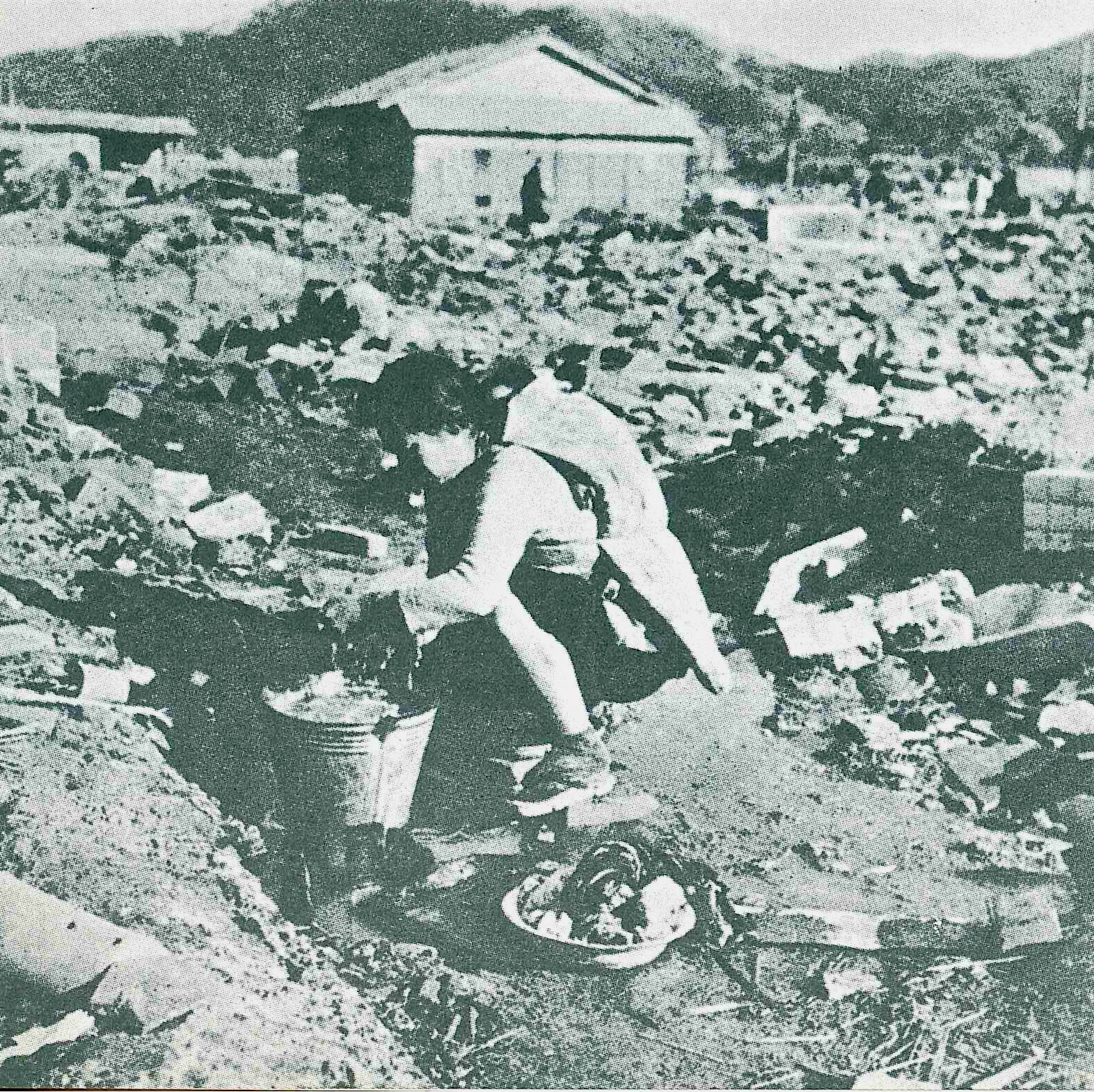
After the Hiroshima atomic bomb exploded, a woman returned home and went out to do laundry in the burnt and destroyed city of Hiroshima. While carrying a child on her back, the woman crouched in a bucket and washed the clothes by hand.

  After the Hiroshima atomic bomb exploded, a woman returned home and went out to do laundry in the burnt and destroyed city of Hiroshima. While carrying a child on her back, the woman squatted in a bucket and washed the clothes by hand. Taking a bath, washing hair and body, and washing clothes were routine decontamination. By rinsing with water, it was possible to remove a significant amount of radioactive material

 At 8:15 a.m. on August 15, 1945, an atomic bomb was dropped on the city of Hiroshima from an altitude of approximately 9,630 meters and exploded just before it hit the ground. Suddenly, a whitish, pinkish glare appeared in the sky, accompanied by unnatural tremors. Within seconds, thousands of people in the streets and yards of downtown Hiroshima were scorched by a wave of searing heat. Many died instantly, while others lay on the ground in agony from the excruciating pain of their burns. Walls, houses, factories, and other buildings that stood upright in the blast were all destroyed. Debris swirled and soared into the air. Trams were picked up and tossed about as if they had no weight or solidity. Everything living was dying in indescribable agony. Beams, bricks, and girders swirled and collapsed houses. Houses within three miles of the hypocenter, the center of the atomic explosion, were flattened as if they had been built with cardboard. The few who managed to escape to safety died from gamma radiation poisoning about 20 to 30 days after the bombing.

 About 30 minutes after the atomic bomb exploded, while the sky over the Hiroshima area was cloudless, a fine rain began to fall on the city and continued to fall for about five minutes. This rain was caused by heated air suddenly rising to a high altitude, where it condensed and fell as rain. When it rained, radioactive materials drifting in the air above fell with the rain, which caused the detected radioactivity level to rise. Later, fierce winds blew and the fire spread with frightening speed. In the evening the fire began to die down and then went out. There was nothing left to burn. Hiroshima had been extinguished. The atomic bombs of Hiroshima and Nagasaki caused a fission reaction in the air, and with nothing to block it, a large amount of radioactive material fell to the ground.


Saturday, December 9, 2023

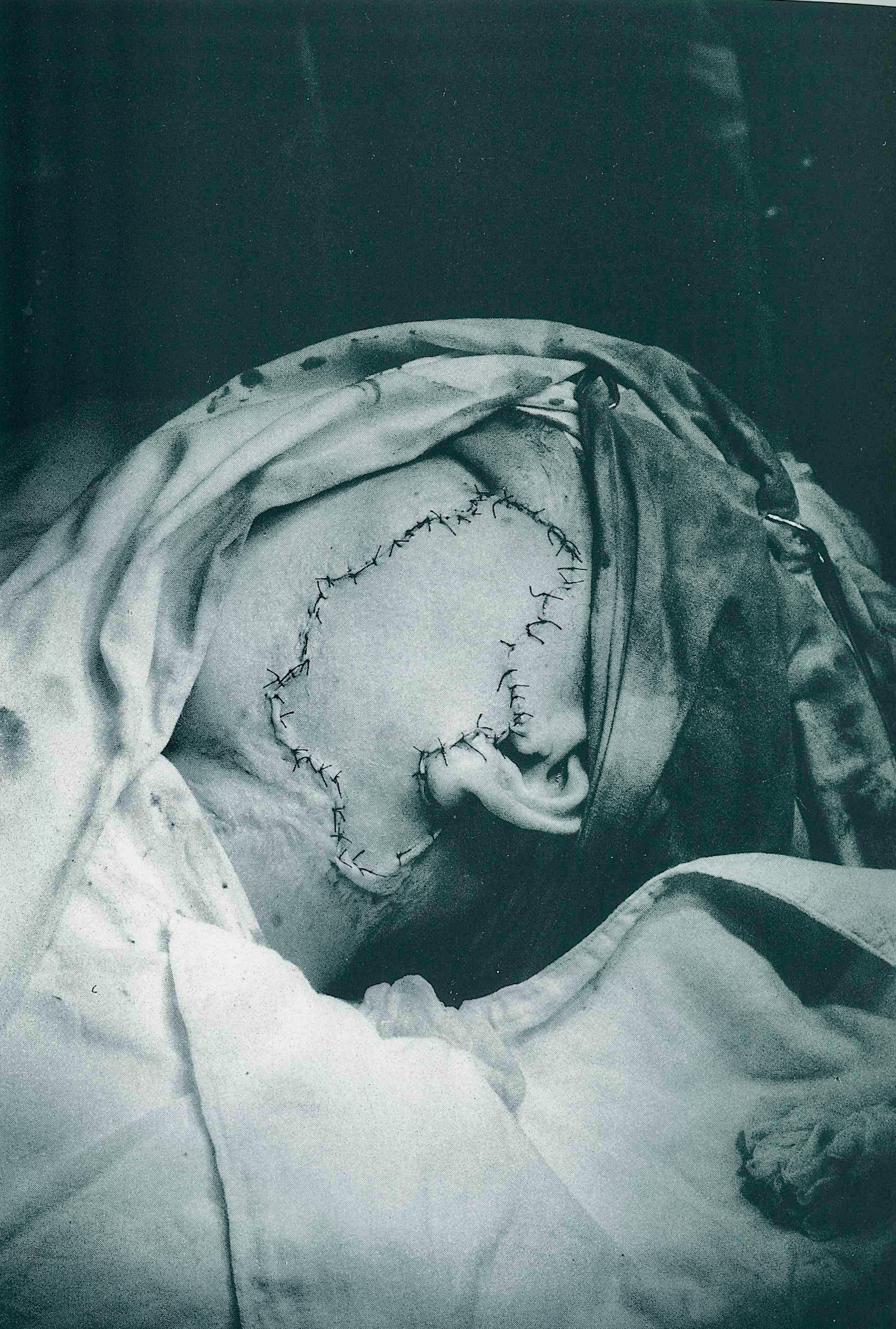
A 4-year-old girl was exposed to the Hiroshima atomic bomb in Fukushima-minami, Hiroshima, approximately 2 km from the hypocenter. The girl, who was 16 years old when she was exposed to the bomb, underwent skin grafting at the Hiroshima Atomic Bomb Surgery Hospital on October 21, 1957, to form the aftereffects of a scar with residual keloids.

 A 4-year-old girl was exposed to the Hiroshima atomic bomb in Fukushima South, Hiroshima, approximately 2 km from the hypocenter. She was left with burns and keloid sequelae on her left face and both hands. The girl, who turned 16 years old after the bombing, was admitted to Hiroshima Atomic Bomb Hospital on May 12, 1957, to form the aftereffects of the remaining scars.

 The 16-year-old girl, nicknamed Ms. Kintoki, was exposed to the Hiroshima atomic bomb when she was 4 years old and suffered severe burns on her face, neck, and elbows. Keloids subsequently appeared from the burned skin, and by the time she was 16 years old, she had undergone nine surgeries at Hiroshima Atomic Bomb Hospital to remove the keloids, rip off the unscarred skin, and have skin grafts. on October 21, 1957, skin graft surgery was performed to remove a scarred keloid on the left side of her face on one side of her cheek. The wound was stretched over the skin that had been removed and grafted from both thighs and stitched together with black thread.


 On the night of the surgery, Kintoki-san was always in pain and gasping. It was customary for his fellow inpatients to gather together and tie him to the bed with a belt strap while he was still under anesthesia. After the surgery, he was required to rest absolutely still. On the day of surgery, before Kintoki-san went to the operating room, he asked his fellow inpatients in the same room in a pitiful voice, "I can't be aborted tonight, so don't tie me up. However, that night, as usual, Kintoki-san fumbled in pain on the bed. Partially unable to rest, he was left with a bleeding spot on his left cheek.

 In July 1957, photographer Ken Domon made his first visit to Hiroshima 12 years after the atomic bombing, and he remained in the city for a total of 36 days until November 1957. He photo-documented the tragic "devil's claw marks" of the A-bomb survivors, including patients at the Atomic Bomb Hospital, on approximately 7,800 frames of film. His photo book "Hiroshima" (Kenkosha) was published in 1958 and received an international response.


Sunday, December 3, 2023

Urakami Station, about 1 km from the hypocenter of the Nagasaki atomic bomb, collapsed, and in mid-October, potato rationing began in the hastily constructed barracks at the Urakami Station depot. Nagasaki citizens who had been living in shelters gathered and formed a line to wait.

   The Nagasaki atomic bomb was dropped and exploded on August 9, 1945, and Urakami Station, located about 1 km from the hypocenter, collapsed. In mid-October, potato rationing began at the Urakami Station barracks. Nagasaki citizens who had been living in shelters since the bombing gathered and formed a line to wait. At the time, there was not enough food and clothing to go around, and everything was rationed.

 Urakami Station on the Nagasaki Main Line was located in the center of Iwakawa-cho, Nagasaki City. It was about 1 km south of the hypocenter. It was bordered by the Nagasaki Steel Works of Mitsubishi Steel Corporation on the other side of the tracks of the Nagasaki Main Line of Japan National Railways. Urakami Station was also lost, and buildings and people were suddenly destroyed by fire. Scattered about were the wreckage, layers of rubble, and smoldering fragments of buildings. At Urakami Station, the station building was completely destroyed, and of the approximately 70 JNR employees who worked there, about 20 were killed instantly. About 45 people died of atomic bomb-related illnesses after being exposed to the Nagasaki atomic bomb.

 The Nagasaki Steel Works of Mitsubishi Steel Corporation, from left to right in the photo, collapsed as well as Plant 4, Plant 1 Machine Shop, Plant 1 Forge Shop, Main Building, Substation, and Plant 2 Forge Shop, all at Nagasaki Steel Works. Due to the blast of the Nagasaki atomic bomb, the steel frames of the walls bent at the point of contact with the base support columns and tilted significantly. The walls and tin roofs were blown away, exposing the steel frame. The Mitsubishi Steel Works, located behind Urakami Station, was engulfed in flames, its steel frame crumbling noisily, bent and folded by the blast. The total number of employees was estimated to be about 5,300, with about 3,300 on duty on the day of the August 9 bombing, and about 1,700 on duty at 11:02 a.m., according to the half-shift system. About 1,700 others were joined by mobilized schoolchildren, women's volunteer corps, and naval operatives. Among them, about 1,400 were estimated to have died as a result of exposure to the Nagasaki atomic bomb.


Saturday, November 25, 2023

He is a 38-year-old male atomic bomb survivor. He is recovering from radiation sickness of A-bomb disease about 3 months after the atomic bomb was dropped. He showed necrosis of the oral gums and mandible.

  He is a 38-year-old male atomic bomb survivor. He is recovering from A-bomb radiation sickness. He was photographed approximately 3 months after the atomic bomb was dropped. He showed necrosis of the gums and mandible in the oral cavity.

 Ulceration of the mucous membranes, including gingivitis, stomatitis, and pharyngitis, was common in more severe cases of A-bomb disease. Clinical manifestations were similar to those of leukopenia. It was customarily accompanied by hemorrhagic diarrhea, which was difficult to assess because in many cases it was due to contagious inflammation. Petechiae may appear on the mucous membranes at the onset of gingivitis. However, skin hemorrhage appeared much later. Based on the data collected in Hiroshima, most cases occurred within a radius of about 1.5 km from the hypocenter.

 The U.S. Strategic Bombing Survey Group was formed on November 3, 1944, under orders from President Roosevelt. President Truman ordered an investigation into the effectiveness of air raids against Japan on August 15, 1945. The U.S. Strategic Bombing Survey Group for the war against Japan consisted of about 300 civilians, 350 officers, and 500 enlisted men. Starting in early September 1945, about a month after the atomic bombs were dropped, branches were established in Nagoya, Osaka, Hiroshima, and Nagasaki, with Tokyo as the base. The materials collected by the survey team were transferred to a permanent government agency, which conducted on-site surveys in the A-bombed cities of Hiroshima and Nagasaki for approximately 10 weeks from October to December 1945. The survey team collaborated with other survey organizations such as the Joint Conference on Atomic Bomb Surveys of Japan, the Anglo-Japanese Survey Mission to Japan, and the Japanese Naval Technical Survey Mission to Japan.

 There was no record of the cause of death of those who died immediately after the atomic bombs exploded. Radiation does not cause death immediately, and deaths from exposure to the atomic bombs are caused by other factors of injury. The Hiroshima Prefectural Health Bureau estimated that about 60% were burns (flash or fire burns), about 30% were falling debris, and about 10% were other injuries. Other estimates were that about 50% were due to burns and about 50% were other physical injuries.

 For survivors very close to the hypocenter who suffered neither flash burns nor secondary injuries, A-bomb sickness developed within two to three days, causing hemorrhagic diarrhea and acute inflammation of the upper respiratory tract and gastrointestinal mucosa. Some died within two to three days of developing A-bomb sickness. Most of the survivors died about a week later. The Japanese investigators had difficulty in proving significant changes in the blood in survivors who died within a short period of time.


The boy was admitted to a hospital in Nagasaki after the atomic bombing. Even five months after the explosion on August 9, 1945, he was still suffering from severe burns and keloids (Bring Back the Human Being, 1982).

    The boy was admitted to a hospital in Nagasaki after the atomic bombing. Even five months after the explosion on August 9, 1945, he suff...